

Salt Water Pool vs Chlorine Pool: Which Is Better in South Africa? (2026 Guide)
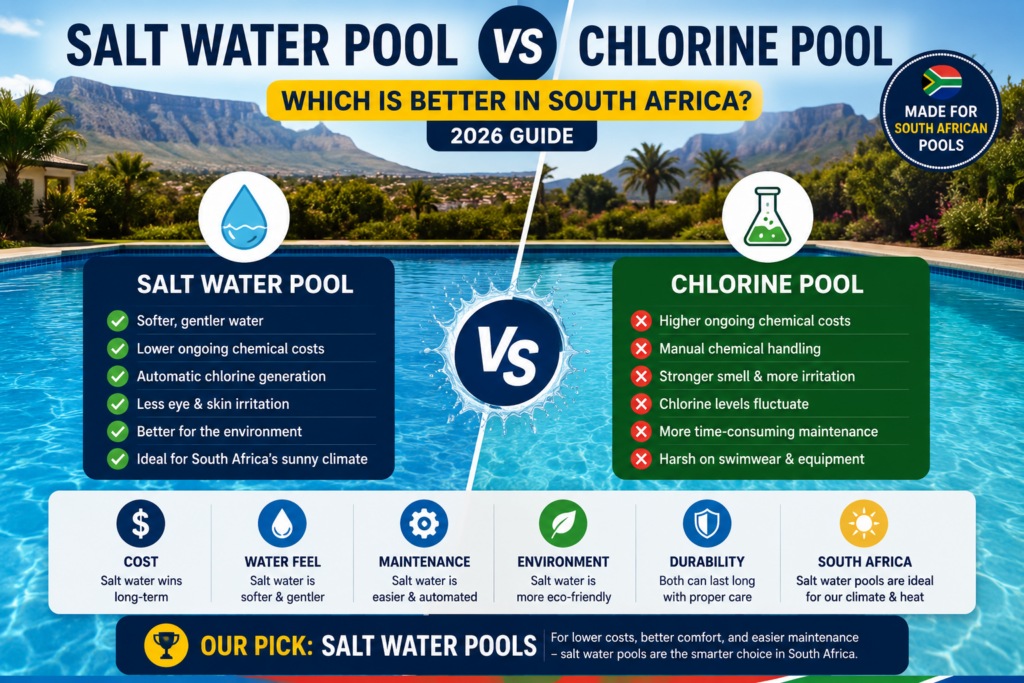
If you are deciding between a salt water pool and a traditional chlorine pool, you are not alone.
It is one of the most common questions we hear from pool owners—especially those dealing with constant maintenance, strong chemical smells, or water quality issues.
Here’s the truth:
👉 Both systems use chlorine
👉 But how they deliver it is completely different
And that difference affects:
- Maintenance
- Cost
- Water quality
- Long-term performance
In this guide, we will break it down clearly so you can decide what actually works best for your pool in South African conditions.
THE KEY DIFFERENCE
A traditional chlorine pool:
👉 You manually add chlorine
A salt water pool:
👉 A salt chlorinator automatically produces chlorine
That’s it.
But that one difference changes everything.
WHAT IS A CHLORINE POOL?
A chlorine pool relies on:
- Liquid chlorine
- Chlorine tablets
- Granular chlorine
You need to:
- Add chemicals regularly
- Monitor levels manually
- Adjust constantly
WHAT IS A SALT WATER POOL?
A salt water pool uses a salt chlorinator to:
👉 Convert salt into chlorine automatically
This means:
- Less manual effort
- More consistent water quality
- Lower day-to-day maintenance
👉 If you’re new to this, start here
→ benefits of salt water pools
SIDE-BY-SIDE COMPARISON
🔹 1. MAINTENANCE
Chlorine Pool:
- Regular chemical handling
- Frequent testing
- Manual dosing
Salt Water Pool:
- Automated chlorine production
- Less hands-on work
👉 Winner: Salt water pool
🔹 2. WATER QUALITY
Chlorine Pool:
- Strong chemical smell
- Can irritate eyes and skin
Salt Water Pool:
- Softer, more natural feel
- More stable chlorine levels
👉 Winner: Salt water pool
🔹 3. COST (SHORT VS LONG TERM)
Chlorine Pool:
- Lower upfront cost
- Higher ongoing chemical costs
Salt Water Pool:
- Higher upfront investment
- Lower long-term maintenance cost
👉 Winner: Depends on timeframe
- Short-term → chlorine
- Long-term → salt
🔹 4. CONSISTENCY
Chlorine Pool:
- Chlorine levels fluctuate
- Requires constant attention
Salt Water Pool:
- Consistent chlorine production
- More stable water
👉 Winner: Salt water pool
🔹 5. EASE OF USE
Chlorine Pool:
- Requires experience
- Easy to make mistakes
Salt Water Pool:
- Set-and-run system
- Easier for most users
👉 Winner: Salt water pool
SALT WATER VS TRADITIONAL CHLORINE
Feature | Salt Water System | Traditional Chlorine |
Maintenance | Low | High |
Cost Over Time | Lower | Higher |
Water Feel | Soft | Harsh |
Chemical Handling | Minimal | Frequent |
Consistency | Stable | Fluctuates |
If you’ve ever struggled to keep your pool balanced, switching to salt can make a huge difference.
EXPERT INSIGHT
From experience, most pool owners start with chlorine because it seems simpler.
But over time, they switch to salt systems because:
👉 They want less maintenance
👉 They want more reliable water quality
WHEN A CHLORINE POOL MAKES SENSE
A traditional chlorine pool may still work if:
- You have a very small pool
- You’re on a tight upfront budget
- You don’t mind regular maintenance
WHEN A SALT WATER POOL IS THE BETTER CHOICE
A salt system is ideal if you want:
- Lower long-term effort
- More consistent water quality
- Fewer manual adjustments
- Better overall experience
THE MOST IMPORTANT FACTOR (MOST PEOPLE MISS THIS)
Even with a salt system:
👉 Choosing the right chlorinator size is critical
If it’s too small:
- You’ll still have problems
- Your pool may turn green
👉 Start here
→ what size chlorinator do I need
HOW TO CHOOSE THE RIGHT SALT CHLORINATOR
When selecting a system, consider:
- Pool size
- Usage
- Climate conditions
👉 To simplify your decision
→ compare salt chlorinator models
READY TO SWITCH?
If you’re considering upgrading:
👉 Browse available salt chlorinators
👉Check: How to Choose the Best Chlorinator in South Africa (2026 Guide)
COMMON MYTHS ABOUT SALT WATER POOLS
❌ “Salt pools don’t use chlorine”
👉 False
They produce chlorine automatically
❌ “Salt water damages equipment”
👉 Not if properly maintained
❌ “Salt systems are maintenance-free”
👉 Not true—but they are much easier to manage
MAINTENANCE COMPARISON (REALISTIC VIEW)
Chlorine Pool:
- Add chemicals weekly
- Test water frequently
- Adjust constantly
Salt Water Pool:
- Check system periodically
- Clean cell occasionally
- Monitor salt levels
👉 Salt systems don’t remove maintenance—but they simplify it significantly
WHY SALT SYSTEMS WORK WELL IN SOUTH AFRICA
Local conditions matter.
In South Africa:
- High temperatures increase chlorine demand
- Sun exposure reduces chlorine levels faster
👉 Salt chlorinators help maintain consistent levels automatically
FINAL DECISION GUIDE
Choose a chlorine pool if:
- You want the lowest upfront cost
- You’re comfortable with manual maintenance
Choose a salt water pool if:
- You want long-term convenience
- You prefer consistent water quality
- You want less daily effort
FINAL THOUGHTS
Both systems work.
But one requires more effort than the other.
👉 A salt water pool simplifies pool ownership
And for most people, that’s the deciding factor.
Thinking About Switching to a Salt Water Pool?
Start by understanding your options and choosing the right system.
👉 compare salt chlorinator models
👉 browse salt chlorinators for sale